First decide whether the vehicle should move
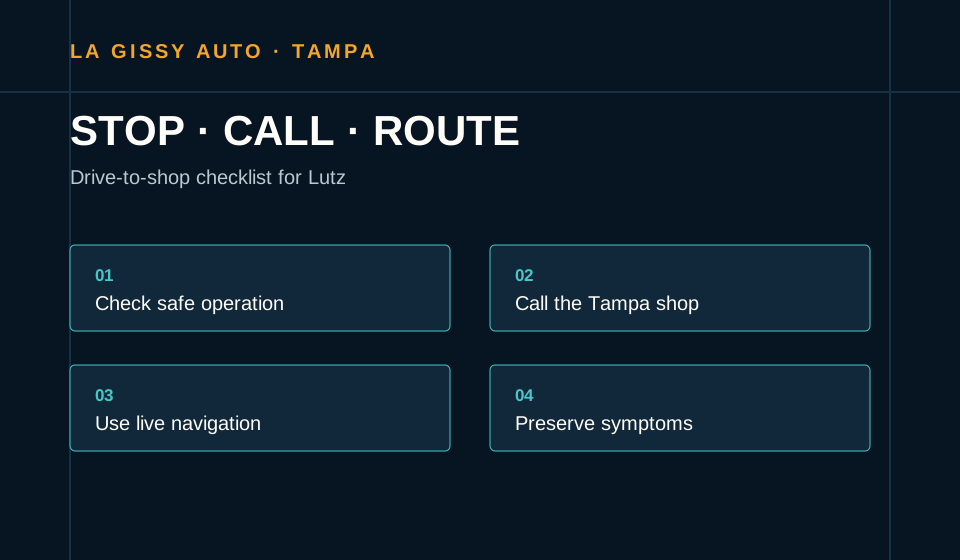
A planned oil change or inspection usually creates a different travel decision from an active safety or temperature problem. Before driving from Lutz, look for a brake pedal that no longer feels normal, steering that binds or becomes unexpectedly heavy, a tire losing air, steam, rapid fluid loss, an oil-pressure warning, smoke or a strong fuel odor.
If any of those conditions are present, stop in a safe place and arrange appropriate help. Do not use a longer trip to reproduce a symptom that may damage the vehicle or reduce control. For a stable, nonurgent concern, call the shop and describe the operating condition before departure.
Compare the route with the symptom
Corridors that may be relevant include US 41 / N Florida Avenue, Bearss Avenue, Fletcher Avenue, I-275. They are geographic references, not fixed directions. Current construction, traffic, rain and the precise starting point determine the actual route.
- US 41 becomes the N Florida Avenue corridor toward the confirmed Tampa address.
- Bearss Avenue, Fletcher Avenue and I-275 can change the practical approach from eastern or western Lutz.
- Confirm live navigation and shop availability before a longer trip, especially with an active warning or fluid loss.
A vehicle that overheats only at idle may behave differently in congestion than at road speed. A tire vibration may appear only on a faster segment. An intermittent charging concern may worsen after repeated stops. Report those patterns rather than treating the route as proof of a particular failed part.
Prepare details that improve the first inspection
Have the year, make, model, mileage and engine or drivetrain information when known. Record the exact warning light, when it appeared, whether it flashes, and whether the vehicle lost power. Note recent repairs, battery disconnection, collisions, pothole impacts, fluid additions and any parts already replaced.
Do not clear codes or disconnect the battery just before the visit unless safety requires it. Stored diagnostic and freeze-frame information can help connect the driver report with the condition that the vehicle detected.
Plan arrival without a time promise
Call +1 813-859-7981 to confirm the starting concern and current availability. Use live navigation to the confirmed address immediately before leaving. The website does not promise travel time, same-day completion or a final price because traffic, scheduling, inspection findings, vehicle configuration and parts availability all vary.
When you arrive, repeat the shortest accurate version of the symptom timeline. Explain what the vehicle does, when it does it and what changed recently. That is more useful than requesting a component solely because an internet result or trouble code named it.
Trip-planning questions
Should I call even for routine maintenance?
Yes. A call confirms current availability and the information needed to identify the correct fluid, filter or scheduled procedure.
Can the shop quote everything by phone?
The starting task may be discussed, but final repair scope can depend on inspection, test results and exact vehicle configuration.
What if the symptom changes on the way?
Stop when safe operation is uncertain. If the change remains stable, record the road speed, temperature, warning lights and other conditions so the shop can use that evidence.