Heat changes load, not the diagnosis
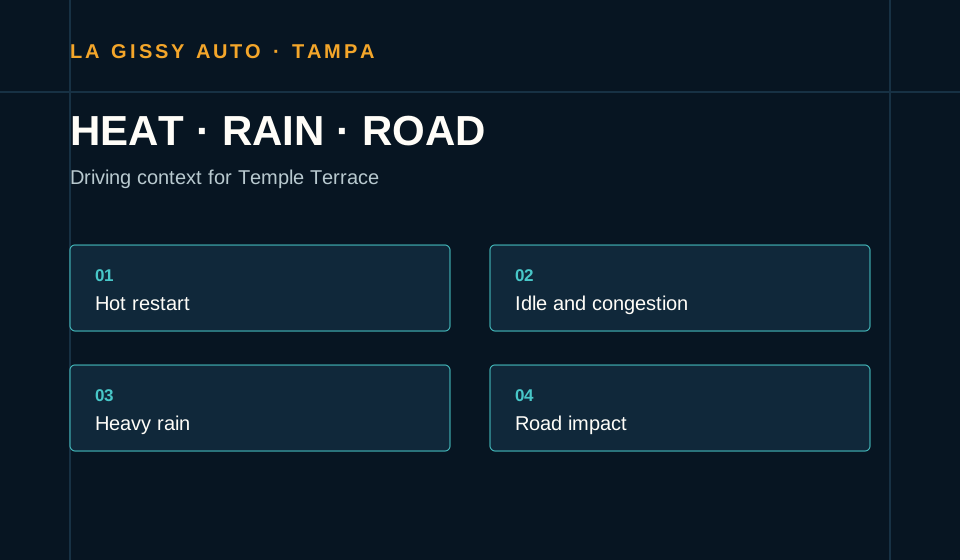
Fowler and Busch traffic can reproduce idle-speed AC, cooling-fan and stop-and-go brake symptoms. Heat can make a weak battery, marginal cooling fan, electrical connection or AC system show symptoms more often, but temperature alone does not identify the failed component.
Summer heat makes battery health and coolant control important before a cross-town trip. Heat can make a weak battery, marginal cooling fan, electrical connection or AC system show symptoms more often, but temperature alone does not identify the failed component.
For a useful report, note whether the problem appears after the vehicle sits in direct sun, during a hot restart, at idle with the AC on, or only after a longer drive. Compare the gauge, warning lights, airflow and sound without opening a hot cooling system or touching moving components.
Rain can expose tires, visibility and electrical weaknesses
Heavy Tampa-area rain changes stopping distance and can reveal worn tread, low pressure, weak wipers, poor lighting and water-sensitive wiring. If a warning or misfire starts after deep water or a storm, record the location of the water exposure and the systems affected.
Do not drive through water of uncertain depth. After an impact or loss of tire pressure, inspect from a safe position and avoid continued driving on a damaged sidewall, exposed cords or severe vibration.
Route conditions around Temple Terrace
Relevant corridors can include Busch Boulevard, Fowler Avenue, N Nebraska Avenue, N Florida Avenue. Congestion, road speed, construction transitions and repeated stops can change how a concern appears. They are diagnostic context, not a substitute for inspection.
Fowler and Busch traffic can reproduce idle-speed AC, cooling-fan and stop-and-go brake symptoms. Record whether the condition is new, intermittent or getting worse and whether it changes with vehicle speed, steering, braking or electrical load.
Summer heat makes battery health and coolant control important before a cross-town trip. Record whether the condition is new, intermittent or getting worse and whether it changes with vehicle speed, steering, braking or electrical load.
Standing water after storms can expose tire tread, brake response and moisture-sensitive electrical faults. Record whether the condition is new, intermittent or getting worse and whether it changes with vehicle speed, steering, braking or electrical load.
Maintenance questions tied to actual use
- Is the vehicle mainly used for short trips, long highway travel or repeated stop-and-go operation?
- When were the battery, coolant, brake fluid, tires and wipers last checked?
- Has the vehicle recently overheated, required a jump start or lost any fluid?
- Are tire wear, pressure loss or steering changes concentrated on one side?
- Does the AC concern occur at idle, at road speed or after a hot soak?
Use the manufacturer schedule as the base and add condition-based inspections when symptoms or harsh use support them. A generic “Florida package” should not replace vehicle-specific requirements.
Local car-care questions
Does Florida heat automatically require shorter intervals?
Not for every item. Follow the vehicle schedule and evaluate severe-use conditions, fluid condition and actual findings.
Does one warning light identify the repair?
No. A code identifies a detected condition or circuit. Testing still needs to distinguish wiring, control, mechanical and component causes.
Where is the shop?
The only confirmed address is 6817 N Florida Ave, Tampa, FL 33604. This guide is written for Temple Terrace drivers considering that Tampa destination.