What this Tampa service page covers
Battery & Electrical Repair is a vehicle-specific inspection and repair path for concerns such as slow or no cranking, battery repeatedly goes dead, flickering lights, accessory or communication faults. The correct starting point depends on how the symptom behaves, which systems interact with it and whether the vehicle can be operated safely.
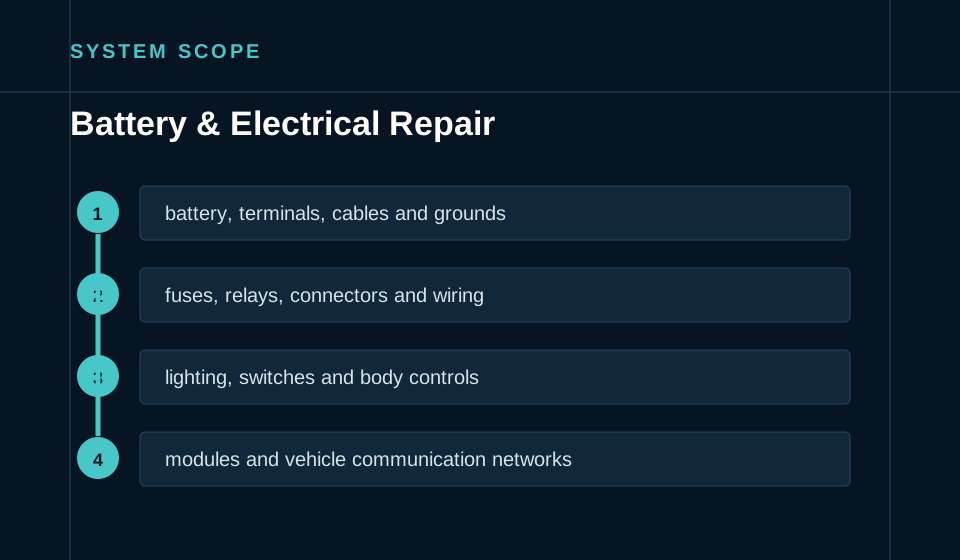
The relevant scope may include:
- battery, terminals, cables and grounds
- fuses, relays, connectors and wiring
- lighting, switches and body controls
- modules and vehicle communication networks
Not every item is inspected or replaced on every vehicle. The purpose of the initial conversation and inspection is to define which portion of the system is involved, which tests can distinguish the likely causes and what evidence is needed before work is authorized.
What Tampa conditions change—and what they do not
Tampa heat raises the operating load on batteries, cooling systems and air conditioning, while stop-and-go traffic can reveal airflow or temperature problems that are less obvious at highway speed. Humidity and heavy rain can also expose weak electrical connections, water intrusion or visibility and tire concerns.
Those local conditions provide diagnostic context; they do not prove a particular component failed. Tell the shop whether the concern changes after a hot soak, during afternoon traffic, in rain, at idle or at road speed. The same symptom can still require a different test path on a different vehicle.
Symptoms, conditions and possible causes
When calling, explain what changed rather than naming the part you expect to be bad. Note whether the concern appears during starting, idling, turning, braking, acceleration, highway speed, hot operation or after the vehicle sits.
- slow or no cranking
- battery repeatedly goes dead
- flickering lights
- accessory or communication faults
Corrosion creates voltage drop. Inspection separates that possibility from other causes that can create a similar driver experience.
Key-off loads can discharge a healthy battery. Inspection separates that possibility from other causes that can create a similar driver experience.
Shorts and opens require circuit isolation. Inspection separates that possibility from other causes that can create a similar driver experience.
Low voltage can trigger multiple module faults. Inspection separates that possibility from other causes that can create a similar driver experience.
Heat, smoke, arcing, a burning odor or repeated fuse failure requires stopping and avoiding further circuit operation.
How inspection moves from symptom to evidence
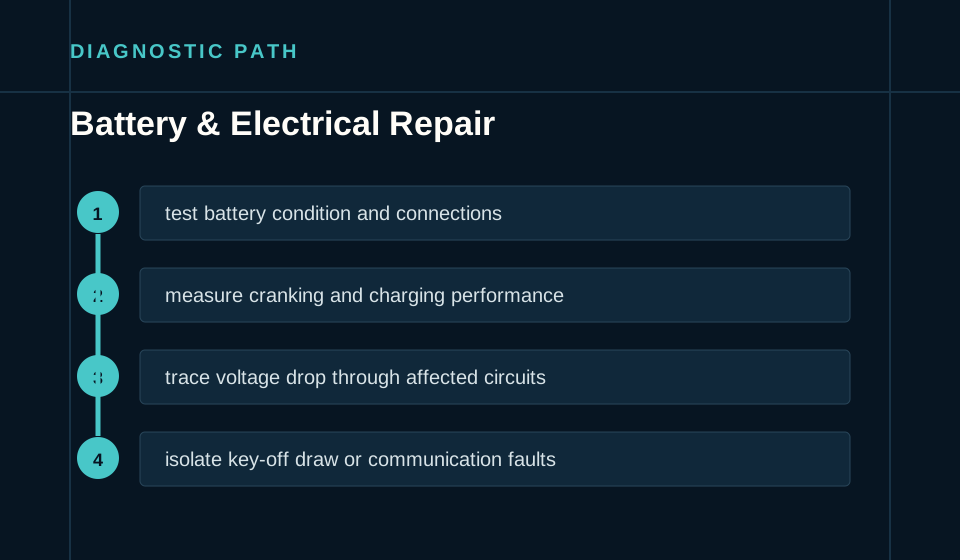
A diagnostic sequence should become more specific as evidence accumulates. For auto electrical repair, that sequence commonly considers:
- test battery condition and connections
- measure cranking and charging performance
- trace voltage drop through affected circuits
- isolate key-off draw or communication faults
Some concerns are confirmed quickly; others are intermittent, temperature-dependent or shared by several systems. When additional testing is required, its purpose and scope should be discussed before moving beyond the initial authorization.
Repair paths after the findings
Results may point to maintenance, an external component, an electrical or control fault, mechanical wear or a need for deeper testing. Plausible repair paths include:
- replace a failed battery and restore connections
- repair damaged terminals, grounds or wiring
- replace verified relay, switch or control faults
- perform setup when a vehicle-specific module requires it
This list explains the decision tree and is not a diagnosis for a particular vehicle. Part selection, related hardware, fluids, programming and verification procedures depend on the exact configuration and confirmed failure.
How this differs from related services
The broader system and its components can produce overlapping symptoms. Use the dedicated page when the named task has already been isolated; use a broader diagnostic page when the source is uncertain.
What changes the estimate
A phone conversation can identify the likely starting scope, but a final repair estimate depends on findings. Major variables for this service include:
- number and access of circuits
- intermittent versus constant failure
- monitoring time for parasitic draw
- module setup or programming needs
Ask whether the estimate separates diagnostic labor from repair labor and whether it includes related hardware, fluids, programming or post-repair checks. No fixed shop price is shown because La Gissy has not supplied an approved price list and vehicle configurations differ.
What affects completion time
Timing depends on whether the symptom can be reproduced, the tests needed to isolate it, component access, the repair you authorize and current parts availability. A known maintenance procedure is easier to scope than an intermittent electrical fault or internal mechanical repair. Call for current scheduling information; this site does not promise same-day completion.
Questions drivers ask about auto electrical repair
Can a final price be given before inspection?
The shop can discuss the starting task by phone. A final repair figure may require vehicle identification, inspection results and confirmation of related parts or procedures.
Does one symptom prove a particular part failed?
No. key-off loads can discharge a healthy battery. Testing is intended to distinguish overlapping causes before parts are authorized.
What information should I prepare?
Have the year, make, model, mileage, warning-light behavior, recent work and a description of when the concern occurs. Preserve diagnostic information rather than clearing codes immediately before the visit.
Related decision guides
What Affects Battery & Electrical Repair Cost in Tampa?
Learn which vehicle details, test findings, parts and labor variables shape a auto electrical repair estimate in Tampa.
Read guide →Battery & Electrical Repair Warning Signs and Inspection
Learn which auto electrical repair warning signs to record, how inspection separates possible causes and when to stop driving.
Read guide →