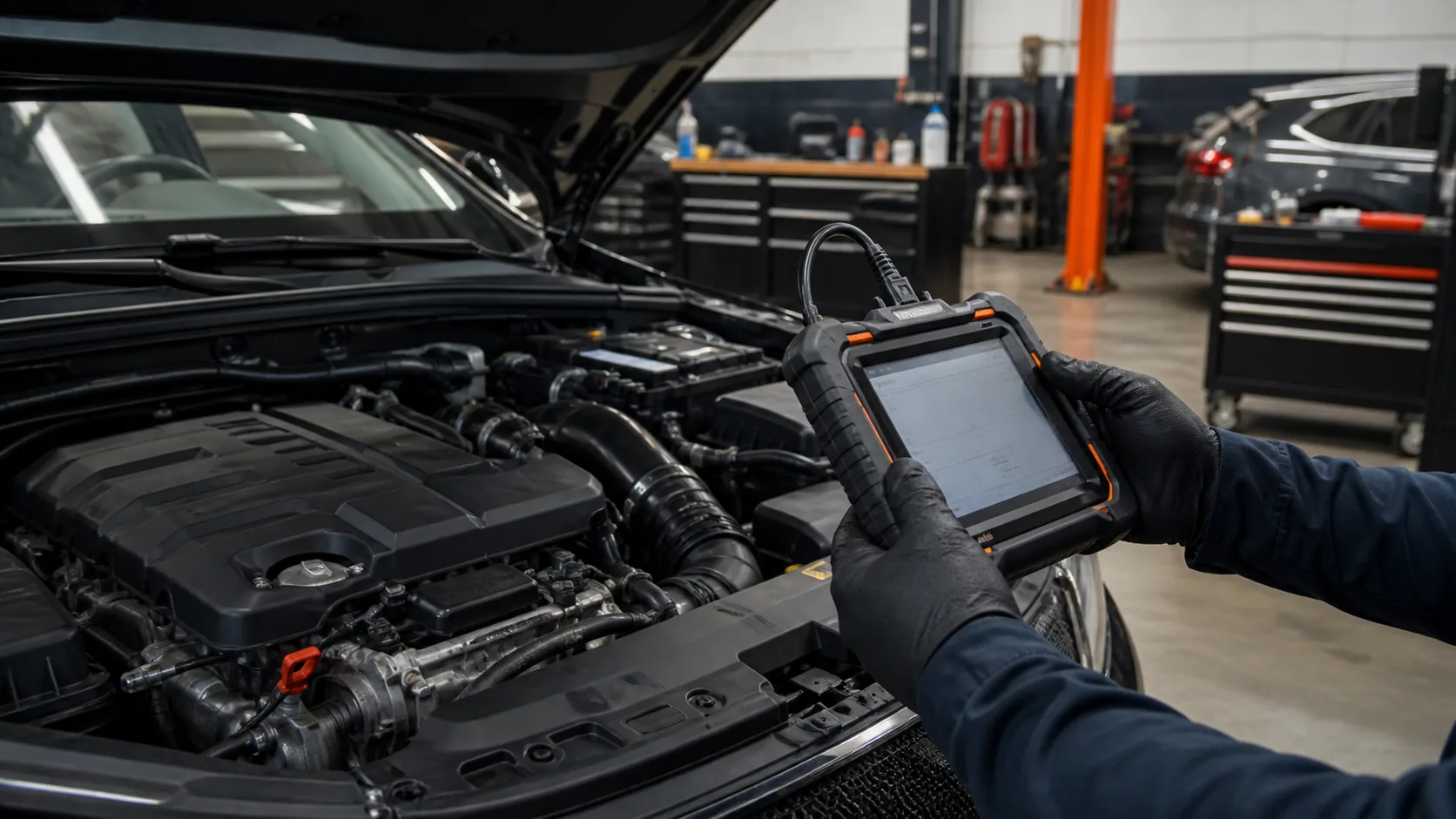
What diagnostic testing covers
Diagnostic testing turns a warning light, starting problem or drivability symptom into an evidence-based repair plan. The starting tests depend on what the vehicle is doing—not on replacing the first part named by a code.
The inspection can include the following systems and components when they are relevant to the reported concern:
- vehicle control modules and diagnostic trouble codes
- battery voltage, grounds, wiring and connectors
- sensors, actuators, ignition, fuel and air inputs
- live data and operating conditions that reproduce the concern
Service and repair scope
- scan data and warning-light context
- visual and circuit checks
- system-specific testing before parts are authorized
Symptoms and possible causes
Describe what changed, whether it happens cold or hot, at idle or while moving, and whether a warning light, odor, leak, noise or vibration appears at the same time. Useful starting symptoms include:
- warning lights
- hard starts
- rough running
- intermittent electrical or drivability concerns
Similar symptoms do not always share one failed part. Depending on the vehicle and test results, possible causes may include:
- a failed sensor or actuator
- low system voltage or a poor electrical connection
- air, fuel or ignition faults
- software, communication or intermittent wiring problems
How diagnosis and authorization work
A useful repair plan moves from the complaint to measurements and then to the smallest supported scope. For this service, the normal diagnostic path may include:
- confirm the complaint and note when it occurs
- scan applicable modules and preserve codes, freeze-frame data and readiness information
- compare relevant live data with expected operating behavior
- perform targeted circuit, pressure, mechanical or component tests before recommending parts
Not every vehicle requires every step. The technician follows the evidence from the initial inspection and requests authorization before expanding the diagnostic or repair scope.
Repair paths after inspection
The findings determine whether the vehicle needs maintenance, an external component repair, deeper testing or a larger mechanical repair. Possible paths include:
- repair wiring or connections
- replace a verified failed sensor or actuator
- correct ignition, fuel, air or mechanical faults
- refer to additional system-specific testing when the first inspection cannot isolate the cause
These are categories of work, not a diagnosis for a specific car. Parts are not selected until the vehicle configuration and failed component are confirmed.
What changes the estimate
A responsible estimate separates the starting inspection from the repair that the findings support. The main variables for diagnostic testing are:
- number of systems or warning lights involved
- whether the symptom can be reproduced
- access required for circuit or mechanical testing
- time needed to trace an intermittent fault
Ask whether the estimate itemizes diagnostic labor, parts, fluids, related hardware and any programming or follow-up procedure. La Gissy confirms additional work before it begins; no universal online price can represent every vehicle and finding.
What affects repair time
Scheduling and completion time depend on whether the concern can be reproduced, how much testing is required, component access, the final authorized scope and parts availability. A maintenance visit with a known specification is usually easier to scope than an intermittent fault or internal repair. Call for the current schedule rather than relying on a generic completion promise.
Car Diagnostic Services questions
Does a trouble code identify the bad part?
Not by itself. A code identifies a detected condition or circuit; testing is used to determine whether the cause is the part, wiring, power supply, another system or the operating condition.
Why can an intermittent problem take longer?
If the symptom is absent during the visit, the shop may need stored data, repeated tests or a controlled road test to recreate the condition without guessing.
Should I clear the warning light before the visit?
Usually no. Stored codes, freeze-frame data and monitor status can provide useful evidence.
What should I bring to the appointment?
Bring the vehicle details, mileage, warning-light information, recent service history and notes about when the symptom occurs. Avoid clearing codes or adding unverified products immediately before a diagnostic visit.