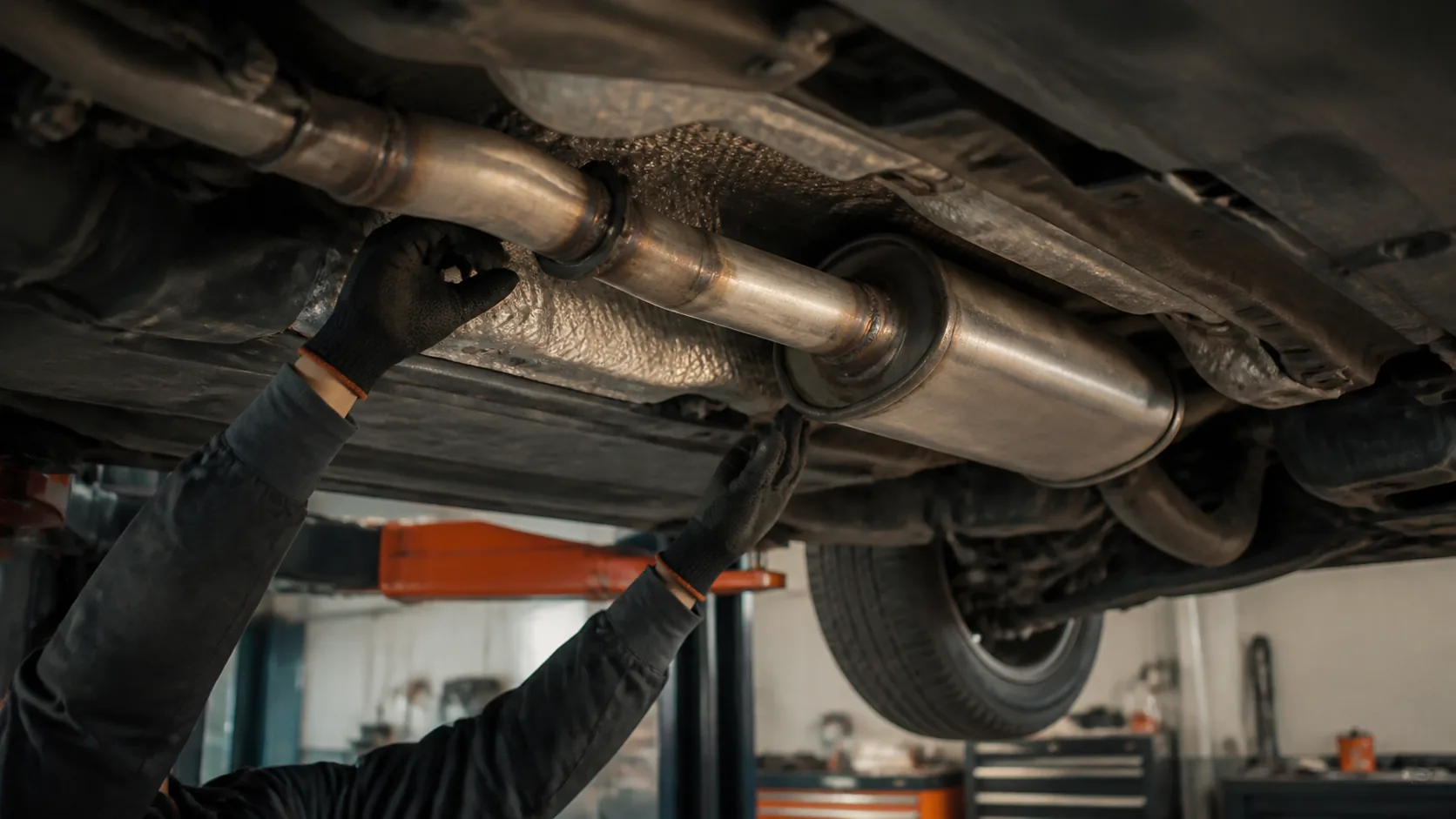
What exhaust repair covers
Exhaust and emissions diagnosis distinguishes a physical leak or rattle from sensor, catalyst and engine-control faults. Replacing an oxygen sensor or catalytic converter without testing can leave the original fuel, ignition or air problem unresolved.
The inspection can include the following systems and components when they are relevant to the reported concern:
- exhaust manifold, gaskets, flex section, pipes and hangers
- muffler, resonator and catalytic converter
- oxygen, air-fuel and exhaust-temperature sensors
- engine controls and fuel mixture conditions affecting emissions
Service and repair scope
- leak and noise location
- muffler and pipe condition
- sensor and catalyst diagnosis
Symptoms and possible causes
Describe what changed, whether it happens cold or hot, at idle or while moving, and whether a warning light, odor, leak, noise or vibration appears at the same time. Useful starting symptoms include:
- louder exhaust
- exhaust odor
- rattling underneath
- emissions-related warning lights
Similar symptoms do not always share one failed part. Depending on the vehicle and test results, possible causes may include:
- corrosion, impact or a failed gasket or flex joint
- broken hanger or loose internal muffler material
- sensor, heater-circuit or wiring fault
- misfire, rich mixture, oil consumption or contamination damaging catalyst efficiency
How diagnosis and authorization work
A useful repair plan moves from the complaint to measurements and then to the smallest supported scope. For this service, the normal diagnostic path may include:
- locate noise, odor and operating conditions
- inspect accessible exhaust joints, pipes, shields and supports
- scan emissions codes and evaluate sensor behavior
- test for leaks and correct upstream engine faults before condemning a catalyst
Not every vehicle requires every step. The technician follows the evidence from the initial inspection and requests authorization before expanding the diagnostic or repair scope.
Repair paths after inspection
The findings determine whether the vehicle needs maintenance, an external component repair, deeper testing or a larger mechanical repair. Possible paths include:
- seal or replace leaking gaskets, flex sections or pipes
- replace damaged hangers, shields, muffler or resonator
- repair verified sensor circuits or failed sensors
- replace a catalyst only after confirming failure and addressing causes that could damage the replacement
These are categories of work, not a diagnosis for a specific car. Parts are not selected until the vehicle configuration and failed component are confirmed.
What changes the estimate
A responsible estimate separates the starting inspection from the repair that the findings support. The main variables for exhaust repair are:
- location and extent of corrosion or impact damage
- welded versus bolt-on components and hardware condition
- sensor access and diagnostic time
- catalyst configuration and underlying engine repairs
Ask whether the estimate itemizes diagnostic labor, parts, fluids, related hardware and any programming or follow-up procedure. La Gissy confirms additional work before it begins; no universal online price can represent every vehicle and finding.
What affects repair time
Scheduling and completion time depend on whether the concern can be reproduced, how much testing is required, component access, the final authorized scope and parts availability. A maintenance visit with a known specification is usually easier to scope than an intermittent fault or internal repair. Call for the current schedule rather than relying on a generic completion promise.
Exhaust & Emissions Repair questions
Does a catalyst code always mean the converter is bad?
No. Exhaust leaks, sensor faults, misfires and mixture problems can affect catalyst monitoring and should be evaluated first.
Why is the exhaust louder during acceleration?
Pressure rises under load, making a manifold, flex-pipe or joint leak more noticeable. Inspection locates the source.
Can an exhaust leak enter the cabin?
Yes. Leaks and vehicle airflow can allow fumes inside; avoid driving when exhaust odor is present in the passenger compartment.
What should I bring to the appointment?
Bring the vehicle details, mileage, warning-light information, recent service history and notes about when the symptom occurs. Avoid clearing codes or adding unverified products immediately before a diagnostic visit.