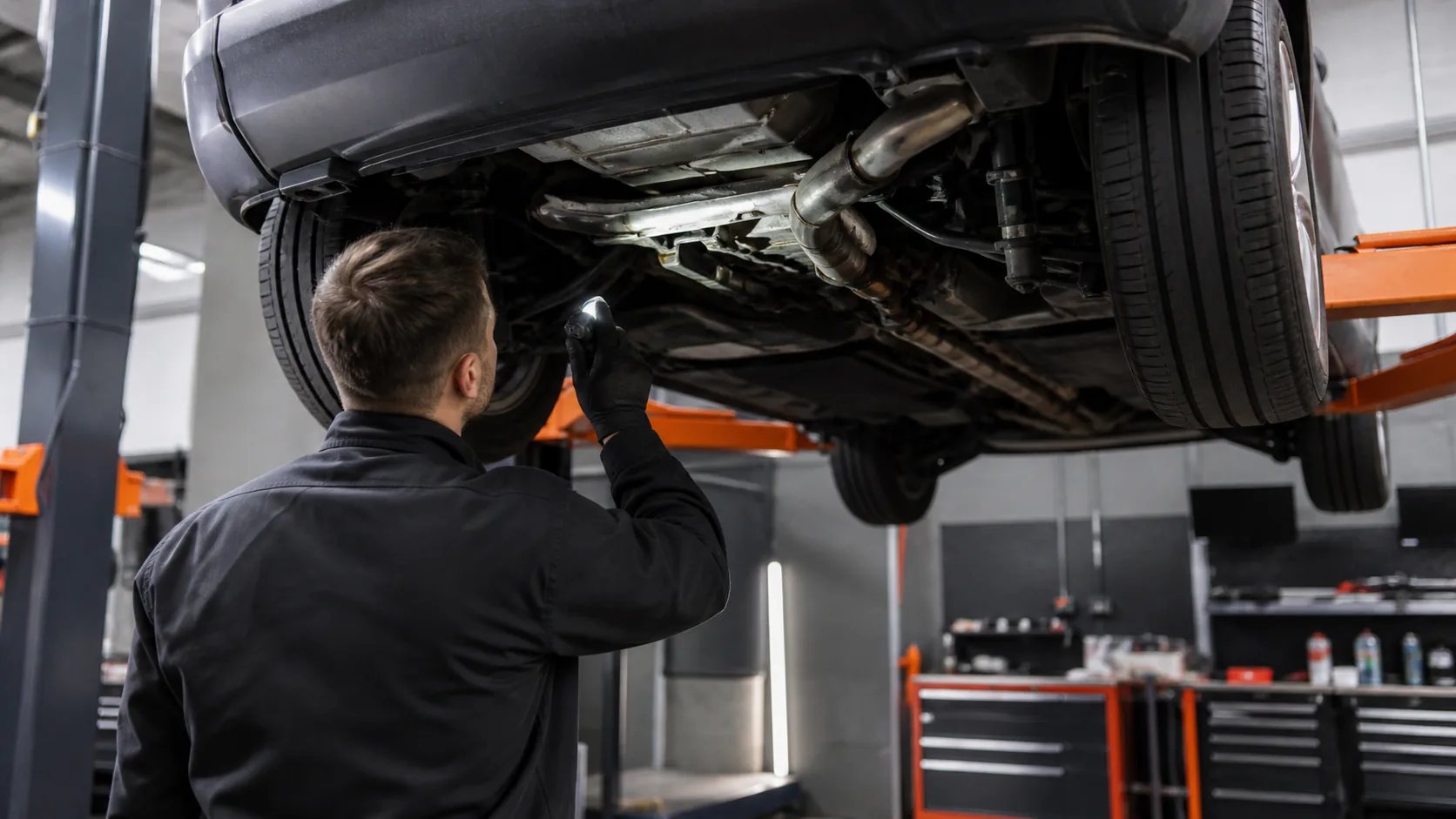
What pre-purchase inspection covers
A pre-purchase inspection gives a buyer an independent snapshot of visible condition, operation and near-term repair risk. It cannot guarantee future reliability or reveal every hidden defect, but it can turn a short test drive into a structured decision.
The inspection can include the following systems and components when they are relevant to the reported concern:
- body, glass, lights and visible structural condition
- tires, brakes, steering and suspension
- engine, transmission, cooling and visible fluid leakage
- warning lights, diagnostic information and road-test behavior when appropriate
Service and repair scope
- road-test observations when appropriate
- fluid, tire and brake condition
- diagnostic and visible-condition findings
Symptoms and possible causes
Describe what changed, whether it happens cold or hot, at idle or while moving, and whether a warning light, odor, leak, noise or vibration appears at the same time. Useful starting symptoms include:
- buying a used vehicle
- comparing repair risk
- reviewing warning lights
- checking visible condition
Similar symptoms do not always share one failed part. Depending on the vehicle and test results, possible causes may include:
- unknown maintenance or accident history
- wear that is not obvious during a seller’s test drive
- stored warning codes or recently cleared monitors
- fluid leaks, tire wear or drivability concerns affecting ownership cost
How diagnosis and authorization work
A useful repair plan moves from the complaint to measurements and then to the smallest supported scope. For this service, the normal diagnostic path may include:
- identify the exact vehicle and obtain seller permission
- inspect accessible exterior, interior, underhood and underbody areas
- scan available modules and note monitor status or warning indicators
- road-test when legal, safe and authorized, then summarize findings by priority
Not every vehicle requires every step. The technician follows the evidence from the initial inspection and requests authorization before expanding the diagnostic or repair scope.
Repair paths after inspection
The findings determine whether the vehicle needs maintenance, an external component repair, deeper testing or a larger mechanical repair. Possible paths include:
- provide observed condition and recommended next diagnostic steps
- separate immediate safety concerns from maintenance and optional items
- estimate follow-up work only where inspection evidence supports a defined scope
- refer body, title, emissions or specialty questions outside the mechanical inspection scope
These are categories of work, not a diagnosis for a specific car. Parts are not selected until the vehicle configuration and failed component are confirmed.
What changes the estimate
A responsible estimate separates the starting inspection from the repair that the findings support. The main variables for pre-purchase inspection are:
- vehicle type, age, condition and access
- depth of scan and mechanical testing requested
- ability to road-test or lift the vehicle
- follow-up diagnosis needed for a specific finding
Ask whether the estimate itemizes diagnostic labor, parts, fluids, related hardware and any programming or follow-up procedure. La Gissy confirms additional work before it begins; no universal online price can represent every vehicle and finding.
What affects repair time
Scheduling and completion time depend on whether the concern can be reproduced, how much testing is required, component access, the final authorized scope and parts availability. A maintenance visit with a known specification is usually easier to scope than an intermittent fault or internal repair. Call for the current schedule rather than relying on a generic completion promise.
Pre-Purchase Car Inspection questions
Does an inspection guarantee the car will not break?
No. It documents accessible condition at the time of inspection; intermittent, concealed and future failures may not be predictable.
Should the seller attend?
The key requirement is permission and access. Purchase terms and seller participation are decisions for the buyer and seller.
Can you tell whether codes were recently cleared?
Readiness-monitor status and available scan information may provide clues, but they do not reconstruct every prior event.
What should I bring to the appointment?
Bring the vehicle details, mileage, warning-light information, recent service history and notes about when the symptom occurs. Avoid clearing codes or adding unverified products immediately before a diagnostic visit.